In a rare market development, Bitcoin outperformed expectations in April — not just with impressive gains, but also with a level of stability that undercut major traditional indexes.
Analysts at Galaxy Digital reported that Bitcoin’s realized volatility over the last 10 trading days dropped to 43.86, below the S&P 500’s 47.29 and the Nasdaq 100’s 51.26. This marks an unusual scenario for a digital asset historically recognized for its sharp price swings.
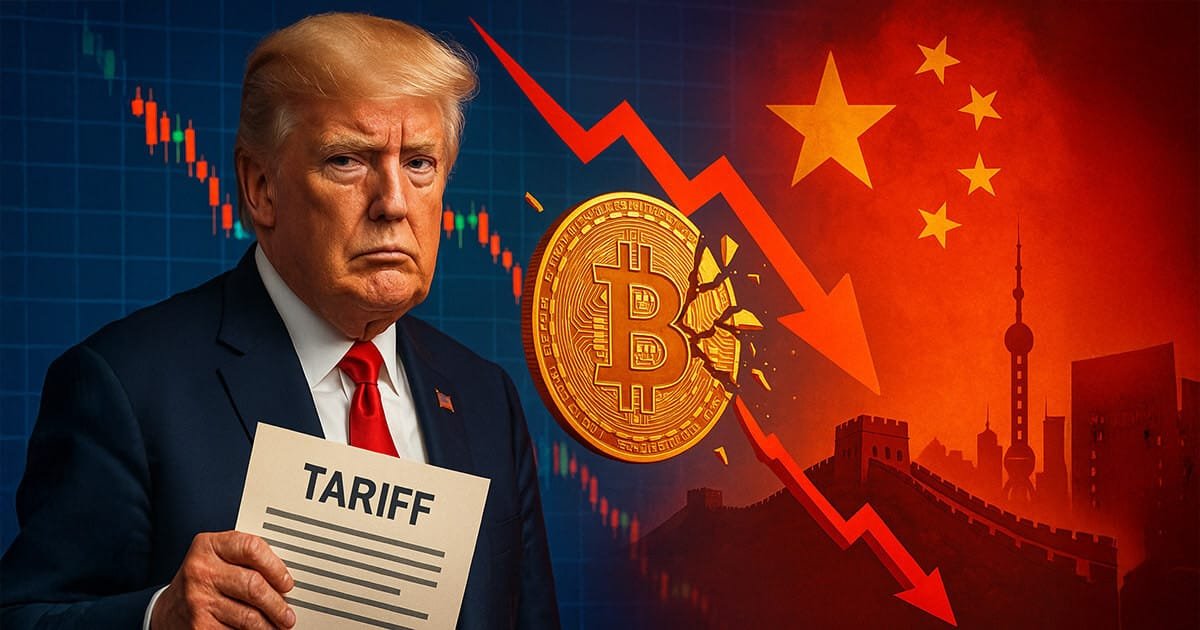
This shift comes at a time of increasing financial uncertainty. Since the U.S. announced new tariffs on April 2, markets have been rattled. The Nasdaq Composite remained stagnant, the Bloomberg Dollar Index slid nearly 4%, and gold briefly touched $3,500 per ounce before retreating to a more modest gain of 5.75%, according to Galaxy’s May 12 market update.

Meanwhile, Bitcoin jumped by 11%, further cementing its role as a potential macroeconomic hedge amid global instability.

Bitcoin’s Market Behavior Shifting
Although Bitcoin still shares moderately high 30-day correlations with the S&P 500 (0.62) and the Nasdaq (0.64), its beta has declined. This indicates a shift in how the asset is perceived — increasingly less as a speculative risk and more as a strategic, long-term investment.
“Bitcoin doesn’t rely on a government’s backing or tax infrastructure to maintain its integrity,” said Chris Rhine, who oversees liquid active strategies at Galaxy.
Galaxy analysts also drew parallels to 2018–2019, when Bitcoin experienced a similar rally amid the U.S.-China trade war, signaling that it may benefit during periods of heightened geopolitical stress.
Hank Huang, CEO of Kronos Research, noted that growing institutional involvement — including inflows into Bitcoin-focused ETFs — is gradually transforming Bitcoin into a digital equivalent of gold.
“As institutions inject more liquidity, volatility drops. This makes Bitcoin an increasingly attractive foundation for modern portfolios,” Huang explained.
Growing Institutional Confidence
Galaxy’s over-the-counter (OTC) trading desk characterized current market behavior as “cautiously optimistic,” supported by restrained use of leverage and minimal stress in hedging activity.
With 95% of Bitcoin’s total supply already in circulation, and demand rising from institutions, ETFs, and even governments, the narrative around Bitcoin as a digital store of value is gaining traction.
“Supply and demand fundamentals are reinforcing Bitcoin’s role as a maturing store of value in the digital space,” said Ian Kolman, co-portfolio manager at Galaxy.
On April 25, Jay Jacobs, head of thematics and active ETFs at BlackRock, commented on a broader trend where countries are diversifying away from U.S. dollar reserves — increasingly favoring gold and Bitcoin as alternative stores of value.
As global markets fragment and traditional safe havens are re-evaluated, Bitcoin is increasingly being viewed as a non-correlated, reliable asset, joining gold as a key hedge in uncertain times.
For more news, find me on Twitter Giannis Andreou and subscribe to My channels Youtube and Rumble
What is your opinion on this particular topic? Leave us your comment below! We are always interested in your opinion!