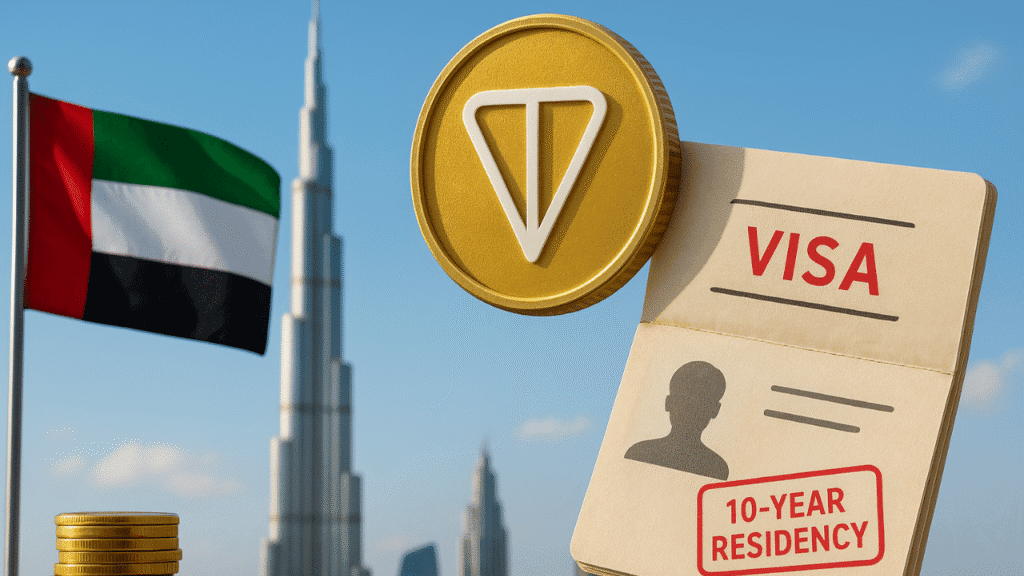
The Open Network (TON), a blockchain project originally developed by Telegram, has introduced a new residency route to the United Arab Emirates (UAE). Through this program, individuals can obtain a 10-year UAE Golden Visa by staking $100,000 worth of Toncoin (TON) for three years and paying a one-time processing fee of $35,000.
In a statement released Saturday, TON revealed that the visa application process can be completed in under seven weeks, starting from the submission of documents to the Visa Office. The process will be handled by local partners in the UAE who assist with application handling and verification of residency status.
Participants in the program maintain full control over their Toncoin during the staking period through a decentralized smart contract system on the TON blockchain. In addition to securing long-term residency, applicants are projected to earn annual returns of 3% to 4% on their staked crypto, providing added appeal for investors.
The visa also includes immediate family members—such as spouses, children, and parents—without additional costs, aside from standard government-related charges.
A More Accessible Path to UAE Residency
Compared to traditional Golden Visa options, which typically require a $540,000 investment in real estate or fixed deposits, TON’s offer lowers the financial threshold significantly—by about 80%. With only $100,000 in staked TON required, the program opens up access to a broader segment of the crypto community.
Bobby Ong, co-founder of CoinGecko, commented on X (formerly Twitter), noting:
“This entry point is five times lower than the conventional property or FD-based routes. High-net-worth individuals might now start paying closer attention to TON.”
Toncoin Price Reacts to the News
Following the announcement, Toncoin saw a strong market response, with prices jumping over 10%. At the time of writing, TON is trading near $2.98, reflecting a daily gain of more than 8%, although it remains over 60% below its value from a year ago, according to CoinMarketCap.
UAE Pushes Forward as a Blockchain-Friendly Nation
This crypto-centric residency initiative aligns with the UAE’s broader strategy to become a global hub for blockchain and digital assets.
Just last month, the Dubai Financial Services Authority (DFSA) approved Ripple’s stablecoin RLUSD for use in the Dubai International Financial Centre (DIFC). Additionally, in May, Dubai’s crypto regulator updated its rules to include real-world asset (RWA) tokenization—an important step in enabling regulated trading of tokenized real estate and similar assets.
The Dubai Multi Commodities Centre (DMCC) free zone has already attracted more than 600 blockchain and crypto firms, and the momentum continues with growing interest in areas like DIFC and One Central, further cementing the country’s leadership in digital finance innovation.