
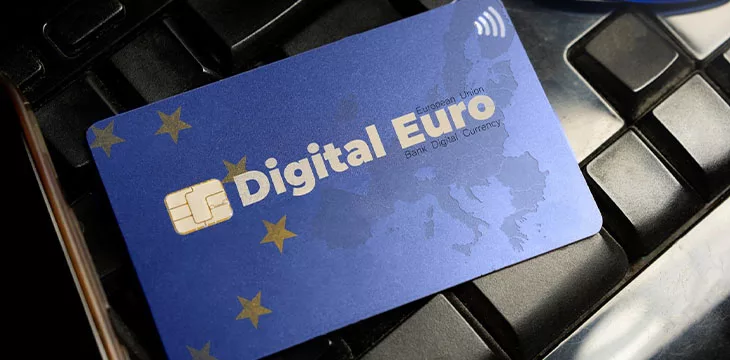
The European Central Bank (ECB) has once again made its case for the creation of a digital euro, but European lawmakers continue to express doubts — particularly around privacy safeguards and the possible impact on commercial banks.
During a hearing before the European Parliament’s economic committee on Thursday, ECB executive board member Piero Cipollone argued that a central bank digital currency (CBDC) would guarantee all Europeans “a free, universally accepted digital payment method, available even during major disruptions.”
Privacy and banking sector concerns
Not all members of parliament were convinced. Critics warned that a digital euro could erode financial privacy and potentially draw deposits away from commercial banks, since citizens might prefer accounts directly backed by the central bank.

Although legislation to establish the CBDC has been under discussion since 2023, progress has slowed due to political disagreements and last year’s elections.
Crisis backstop role
Cipollone highlighted that much of the EU’s payments infrastructure depends on providers outside the bloc, limiting Europe’s ability to act independently during crises. He described the digital euro as a potential safeguard against cyberattacks or widespread system outages, drawing parallels with the United States’ promotion of dollar-backed stablecoins.

He also emphasized that the new digital currency would not replace cash but rather complement it, ensuring resilience and inclusion while reflecting the growing reliance on electronic payments.
Debate over risks and limits
Lawmakers, however, pushed back on key points. Some questioned whether the ECB could truly guarantee anonymity. Cipollone assured them that the system would be designed so the central bank would have no visibility into payer or payee data, with an offline option intended to mirror the privacy of cash transactions.
Pierre Pimpie, representing the right-wing Patriots for Europe group, argued that widespread adoption of a digital euro could drain deposits from private banks. He also raised concerns over the ECB’s authority to impose caps on account balances, warning that the limits could be adjusted in emergencies.
Cipollone responded that any cap would be based on strict analysis, adding that in a true crisis, wealthy investors would likely move their money into foreign stablecoins rather than the ECB’s system. “At that point,” he said, “the digital euro would be the least of our concerns.”
Possible launch by 2029
The ECB is currently working on the basis that a legal framework for the digital euro will be finalized by mid-2026. Approval is required from the European Parliament, the European Commission, and the European Council — a process that could stretch on for months.
If the law is in place by 2026, the ECB would then need up to three years to build and test the system, meaning the earliest realistic launch date would be 2029, provided there are no major setbacks.
Download the FREE Bitcoin Mining eBook
Kickstart your mining journey with essential insights:
https://bitmernmining.com/landing-page-ebook-download/
For more news, find me on Twitter Giannis Andreou and subscribe to My channels Youtube and Rumble
What is your opinion on this particular topic? Leave us your comment below! We are always intere