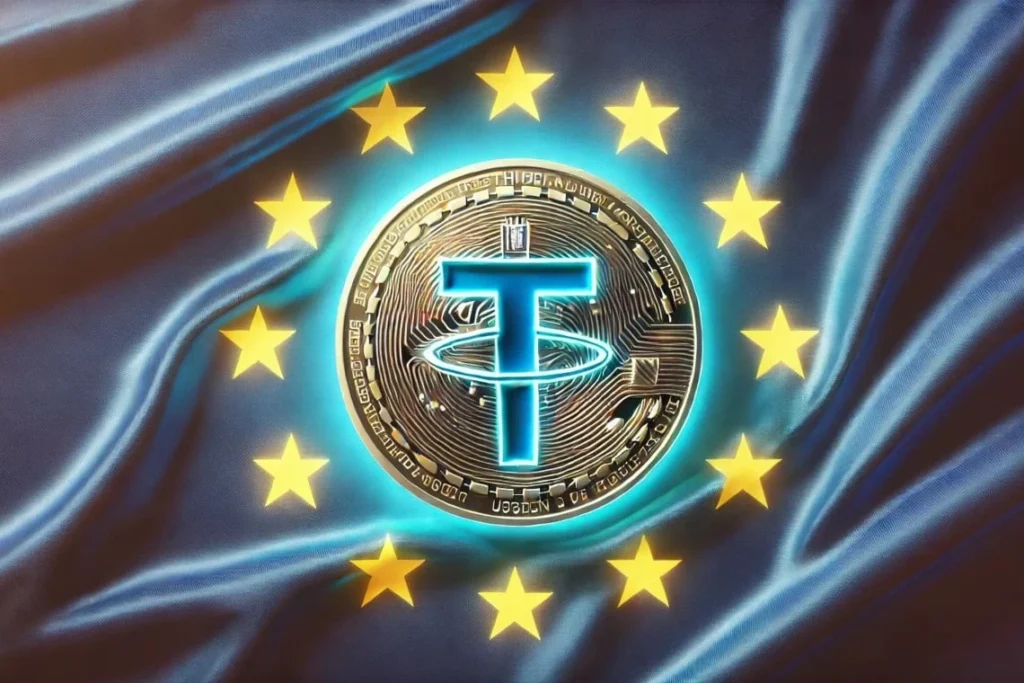
The European Securities and Markets Authority (ESMA) has provided further insight into the status of stablecoins that fail to comply with the Markets in Crypto-Assets Regulation (MiCA), adding to the ongoing uncertainty surrounding their classification and use.
On March 3, Binance announced plans to remove nine stablecoins that do not align with MiCA regulations, including Tether’s USDT, for users in the European Economic Area (EEA). However, while these tokens will no longer be available for trading, Binance confirmed that deposits and withdrawals of non-compliant stablecoins will still be supported after the March 31 delisting deadline.
ESMA, the key regulatory authority overseeing MiCA compliance, stated that providing custody and transfer services for these stablecoins does not breach European cryptocurrency laws.

Custody and Transfer of Non-Compliant Stablecoins Not Explicitly Banned
“Under MiCA, custody and transfer services alone do not constitute an ‘offering to the public’ or ‘seeking admission to trading’ of non-compliant asset-reference tokens or e-money tokens,” an ESMA spokesperson told on March 4.
“These services are therefore not explicitly prohibited under Titles III and IV of MiCA,” the representative added.

Despite this, ESMA emphasized that crypto asset service providers (CASPs) in Europe should focus on limiting services that facilitate the acquisition of non-MiCA-compliant assets, referring to guidance issued on January 17, 2025.
Ongoing MiCA Uncertainty
ESMA reiterated that CASPs are allowed to offer “sell-only” services—enabling withdrawals—until March 31, giving investors time to exit their positions.
“All CASPs must carefully assess whether any of their services amount to an offer to the public under MiCA,” ESMA stated.
The regulatory body’s clarification that MiCA does not outright prohibit the custody and transfer of non-compliant stablecoins—while also urging CASPs to halt withdrawals after March 31—adds to the growing confusion regarding MiCA compliance.
Juan Ignacio Ibañez, a member of the MiCA Crypto Alliance’s Technical Committee, has previously highlighted the debates surrounding the delisting of USDT and other stablecoins under MiCA rules.

The uncertainty surrounding MiCA’s treatment of stablecoins is just one of several concerns about the new regulatory framework. Many industry experts have pointed out that MiCA does not fully address key sectors such as tokenized real-world assets, cryptocurrency staking, and other critical areas of the crypto ecosystem.
“ESMA and National Competent Authorities are closely monitoring market developments to ensure a smooth transition into the MiCA regime,” an ESMA spokesperson stated.
For more news, find me on Twitter Giannis Andreou and subscribe to My channels Youtube and Rumble
What is your opinion on this particular topic? Leave us your comment below! We are always interested in your opinion!